The Step-by-Step HOA Collections Process:
From First Notice to Final Resolution
CCS follows a structured, credit-reporting-first process designed as the Modern Alternative to Attorney-Driven HOA Collections — keeping boards in control while emphasizing early accountability.
When a homeowner falls behind on assessments, it can feel like the entire association’s priorities suddenly shift into emergency mode. Budgets tighten, cash flow drops, projects get delayed, and board members start worrying about how to collect with fairness, consistency, and compliance. The good news? A well-structured, transparent collections process removes the guesswork and helps everyone stay calm, informed, and moving forward together to a solution.
This guide walks you through the step-by-step HOA collections process, from the moment a payment is missed to the final resolution — whether that involves a voluntary payment, a repayment plan, or enforcement. We’ll look at the essential timelines, procedures, notices, and decision points so your board can reinforce its policies ethically and efficiently.
What Is The Most Efficient Step-By-Step Process For Recovering Delinquent HOA Dues?
The most efficient process employs a structured sequence of friendly reminders, followed by formal notices, and credit-based accountability before legal escalation is considered. Community Collection Service (CCS) streamlines this workflow with an automated flat-fee model, helping associations reach a 64.7% success rate with minimal administrative effort.

Why a Clear Process Matters for Every Community
Every association needs a standard approach to collecting late assessments. It protects the community’s finances, removes bias, ensures compliance with governing documents, and gives delinquent members a fair opportunity to resolve their account – before things get out of hand.
A strong process is:
- Predictable — everyone knows the steps and timeline
- Professional — the community stays neutral and respectful
- Efficient — fewer surprises, conflicts, and delays
- Consistent — identical treatment for every member and delinquency
These qualities form the backbone of a modern HOA collections timeline, which ideally begins long before a board ever considers liens or outside help.
1. Starting Point: Payment Missed — Day 1
The HOA collections process begins the moment an owner fails to pay their regular assessments on time. Most communities allow a short grace period (5–15 days) before taking any action. Once that window closes, the account enters the association’s internal collection procedure, which should be outlined in any board-approved collections policy. Though, some policies and CC&Rs simply state broad language, such as all ‘reasonable efforts’ are available to the board.
What the board or manager typically does at this stage:
- Posts the unpaid amount to the ledger
- Applies late fees and interest (if permitted)
- Generates an internal record of the overdue balance
While this first step may seem administrative, consistency and documentation set the stage for all future actions. It ensures each delinquent owner is treated the same way at the same point in the recovery timeline.
2. Courtesy Reminder Notice — Days 15–30
Before anything formal goes out, most associations send a friendly reminder. This isn’t legally required in most states, but it’s a neighborly practice — especially for owners who may have simply forgotten or overlooked a notification.
A strong courtesy notice should:
- Confirm the overdue balance
- Provide an updated account total
- Offer simple payment options
- Encourage communication if the homeowner needs help
This small step prevents many accounts from progressing further down the collections path.
3. Formal Notice of Delinquency — Days 30–45
If the courtesy reminder goes unanswered, the board moves into the notice of delinquency process, which is the first formal “official” step in most HOAs’ progression. This notice is required in some states and, if so, is often explicitly defined in an association’s governing documents.
A proper Notice of Delinquency includes:
- Total amount owed (including fees)
- Explanation of the violation (missed dues and dates)
- Time allowed to cure the delinquency
- Instructions for payment
- Statement of potential next steps
This stage should feel firm but still cordial. You’re simply informing the owner that their account is now formally late and that the board is obligated to continue through its policy until payment is resolved.
4. Demand Letter for Unpaid HOA Dues — Days 45–60
When the delinquency remains unresolved, the next step is the demand letter for unpaid HOA dues. This is a more serious communication and is often sent by management or a third-party collection partner, at the board’s discretion.
This letter typically communicates:
- The full, current amount owed
- A deadline to remit payment
- A summary of the association’s legal rights
- A warning of upcoming enforcement actions (specifically outlined)
- Directions on how disputes can be addressed
- Instructions for homeowners to pay the board or manager directly
At this point, the board is demonstrating its duty to the community — ensuring fairness and fiscal stability by following the established process step by step.
A key step that helps boards motivate homeowners with this demand is to clearly outline any forthcoming consequences. Many HOAs have found that delineating implications to homeowners such as being credit reported, or progressing to foreclosure proceedings, is very effective. However, a board should never make any false claims or imply any next steps they’re not willing and able to follow through with. Empty threats rapidly damage community respect for a board’s legitimacy and authority.
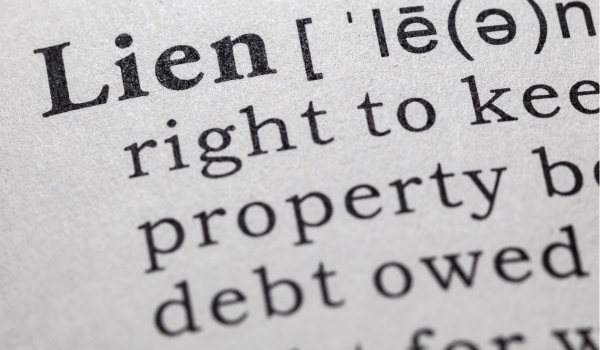
5. Lien Placement Steps — Days 60–90
If the homeowner still hasn’t responded, the next phase involves the lien placement steps, which vary by state but generally follow a similar structure. A lien serves as the association’s official claim against the property for unpaid assessments.
Placing a lien often includes:
- Preparing a statement of account
- Issuing a pre-lien notice (if required)
- Waiting the mandatory cure period
- Recording the lien with the county
- Notifying the owner of the recording
The purpose of a lien isn’t to punish—it’s to secure the debt and protect the community’s collective interest. It also serves as a major turning point in the HOA collections timeline.
Most boards are now saving money by filing their own liens with the help of local court clerks. Easy to fill-in lien templates are often easily available, and are often used by local attorneys. Filing themselves reduces a board’s cost to only the filing fee itself, eliminating attorney fees.

6. Post-Lien Enforcement Options — Days 90+
Once a lien is in place, the board typically has a few options::
A. Using an outside collection agency
This may involve forwarding the file to a credit-reporting-based collection agency or other enforcement partner. Boards often prefer this approach because it can be effective, it keeps the association neutral and avoids legal escalation.
B. Going to Small Claims Court
Going to small claims court can be effective. However, each court’s rules vary widely. So, a board member should contact the Small Claims Court for local rules. The good news is, many courts have volunteer legal counsel who will help a board member prepare. After a board member pursues late assessments through such proceedings once, they’ll have a good handle on the process moving forward. Bare in mind, once you win in court you may still need third-party collections to recover the funds.
C. Legal action (last resort)
For years, this was the automatic response for HOAs. However, as homeowners have learned to ignore attorney letters (due to boards’ reluctance to pursue foreclosure), the expense of this model has become less attractive for many boards.
A newer model for accounts requiring extreme escalation involves attorneys who get judgments and seize assets to cure indebtedness. Typically this comes in the form of confiscating funds from bank accounts or garnishing wages. Such a step – while effective – should only be taken after more conventional avenues have been applied.
Regardless of the route chosen, the board should emphasize communication, fairness, and adherence to state laws and federal regulations.
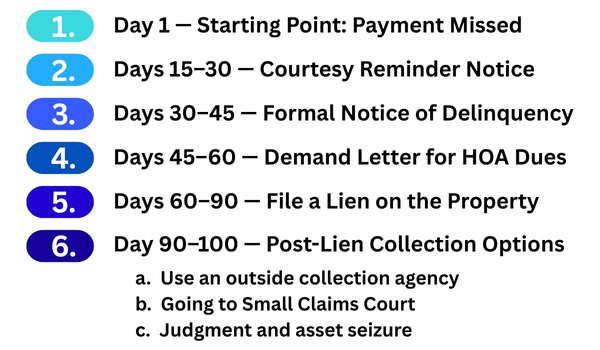
7. Creating an Assessment Collections Flow Chart (and Why It Helps)
Many boards now map the entire process visually through an assessment collections flow chart to make the timeline and procedures easy for managers and members to understand, and for board members to follow.
A good flow chart includes:
- Each notice and the day range it’s issued
- Waiting periods
- Available resolutions at each step
- Options and parameters for payment plans
- When external partners should become involved
- When and how liens are recorded
A flow chart also reduces risk: when new board members join, they immediately understand the collection policy and avoid inconsistent enforcement.
8. Communication Throughout the Process
A board’s tone and transparency often help determine outcomes. Clear and respectful communication can inspire cooperation and avert potential rising of friction or tensions.
Best practices during collections:
- Keep language professional, consistent and respectful
- Never personalize a delinquency — stick to the facts
- Document every communication and step taken
- Follow your timeline precisely and uniformly
- Offer payment solutions available
- Avoid making legal claims or insinuations
When homeowners feel respected and understood, they’re far more likely to resolve the issue before complications arise.

9. Final Resolution Options
Ultimately, the HOA collections process can resolve in several ways:
Voluntary full payment
This is the most common and ideal outcome.
Payment plan completion
Allows owners to catch up gradually while the board protects the community’s financial position.
Third-party resolution
A credit-reporting-based collection agency, like CCS, often resolves delinquencies faster, more peacefully, and less expensively than legal actions.
Legal enforcement
Used only as needed, boards can now take action on any remaining harder to collect scenarios through procuring a judgment and seizing assets.
Each possible outcome should feel structured, fair, and predictable — with the association following its timeline step by step from beginning to resolution.

Summary: Why a Strong Process Protects Your Entire Community
CCS’ step-by-step process gives HOA boards a professional, compliant, and board-controlled path to recovering assessments. By focusing on early credit reporting and structured resolution, many associations achieve stronger recoveries with fewer complaints and reduced reliance on attorney-driven escalation.
This approach helps preserve community relationships while maintaining financial stability for the association.
Download our free Board Review Package to see how the Modern Alternative to Attorney-Driven HOA Collections can work for your community.